فارسی
|
English
|
لوگوی همدلی مردم افغانستان

حزب همدلی مردم افغانستان

The People Of Afghanistan's Empathy Party

Biography

Ustad Abdul Haq 'Shafaq'
Leader of the Hamdeli Party of the People of Afghanistan
About

Ustad Abdul Haq Shafaq was born on the 4th of Hamal 1340 (March 24, 1961) in the village of Chaharbagh, a district of Sar-e Pol province, into a religious family. In 1352 (Solar Hijri Calendar), he graduated from Shah Chanar Primary School. He completed his high school education in the spring of 1357 at Imam Abu Hanifa Vocational High School in Kabul. His graduation coincided with the communist coup of the 7th of Saur, which made it impossible for him to continue his studies inside the country. As a result, he left for abroad. Despite two years of relentless effort, he was unable to continue his education. (During the Republican era, he was able to continue his studies in political science and completed his master’s degree.)

Establishment of the Hamdeli Party of the People of Afghanistan

During the Republican era, from 2004 to 2021, Ustad Shafaq served his country and people as governor in five different provinces for nearly 13 years. During this time, in addition to receiving hundreds of letters of appreciation and commendation, he was the only civil service employee to be awarded three high-ranking state medals by the President of the country in recognition of his sincere services.

In the later years of the Republic, at the suggestion of his comrades and a group of young national cadres, he founded the 'Hamdeli Party of the People of Afghanistan.' A party that has its roots in the struggles of the past four decades and is actively present in 15 provinces of the country.

Currently, he continues his political struggle as the Chairman of the Central Council of the mentioned party.

The Period of Jihad

After losing hope of continuing his studies abroad, Ustad Shafaq, along with several like-minded companions, returned to his homeland to take part in the struggles of the Afghan people. At that time, the fronts in Sar-e Pol province were operating under the name "Jozjan Islamic Association" (as Sar-e Pol was then part of Jozjan province). He was appointed as the Political Deputy of the mentioned association. Under his efforts and those of his colleagues, cultural and educational centers were established in various areas under the association’s control.

In 1360 (Solar Hijri Calendar), he once again attempted to continue his studies abroad, but this time too, he was unable to achieve his goal. Therefore, after performing the Hajj pilgrimage, in the winter of 1363, he took command of 450 young migrant fighters and set off for the northern provinces of Afghanistan. After 45 days of travel on foot, enduring the harsh winter conditions, he reached his hometown and was once again appointed as the Political Deputy of the mentioned base.

In 1364, after the necessary conditions were met, he worked alongside other officials to establish "Markazi Resalat Base" in Balkhab district, Sar-e Pol province. With the start of the base’s operations, through the votes of the majority of its members, Hujjat al-Islam Sayyed Hassan Reza Adeli was elected as the President, and Abdul Haq Shafaq was chosen as the Deputy of the base. He constantly monitored and supervised the activities of his fellow fighters in the provinces of Sar-e Pol, Balkh, and Samangan.

As preliminary efforts began to establish "Hezb-e Wahdat Islami Afghanistan" (Islamic Unity Party of Afghanistan), he actively participated in its first founding meeting in the summer of 1367 in Lal wa Sarjangal district, Ghor province. In the autumn of 1367, he traveled to Bamyan to follow up on matters related to the formation of the party. Alongside 15 to 18 prominent Hazara and Shia Afghan leaders, he worked for seven months to draft the party’s charter and bylaws for its working committees. He not only assisted in drafting the charter but also prepared more than 60% of the committee bylaws, making him one of the senior founders of Hezb-e Wahdat Islami Afghanistan.

After the official establishment of the Islamic Unity Party of Afghanistan, in the winter of 1368, he was appointed as the Security Deputy in a delegation sent to Pakistan and Iran to announce the party’s existence.

From 1368 to early 1370, he served as the Head of one of the committees and a member of the Party’s Foreign Representative Council. After the first congress of Hezb-e Wahdat in 1370 in Yakawlang district, Bamyan province, he was elected as the Head of the Political Commission and Spokesperson of Hezb-e Wahdat Islami Afghanistan in the Central Council meetings that followed the congress. He continued in this role until 1372.

After the fall of the communist regime in the spring of 1371 and the establishment of the Hezb-e Wahdat Decision-Making Council in Kabul, he became a member of this council. During this period, while maintaining his party responsibilities, he also served as a member of the Afghan Supreme Jihad Council, chaired by Professor Sibghatullah Mojaddedi.

In 1373, he was appointed as the Head of the General Representative Councils of Hezb-e Wahdat outside Afghanistan.

The Period of Resistance

With the split of Hezb-e Wahdat in 1994 (1373 in the Persian calendar) in Kabul, the party’s representative offices abroad were also separated. At the same time, Kabul was occupied by the Taliban, and the Islamic State of Afghanistan, under the leadership of Ustad Rabbani, continued its activities in Takhar province. During that period, Ustad Shafaq served as the Minister of Labor and Social Affairs for some time.

After the formation and expansion of the Resistance Front against the Taliban, political opposition activities also expanded in four major fronts: the Rome axis, the Northern Resistance Front, the Cyprus Group, and the Peshawar Group. Ustad Shafaq was a senior member of the Cyprus Group, which aimed to restore peace in the country through political processes and actively participated in meetings and trips across regional and international countries.

The assassination of Ahmad Shah Massoud on September 9, 2001 (18th of Sunbula 1380) in Takhar province, followed by the tragic September 11 attacks in the United States, led to the fall of the Taliban regime and the convening of the Bonn Conference to determine the future government of Afghanistan. Ustad Shafaq played a significant role in shaping the Interim Administration through the Bonn Agreement.

The Period of the Republic

On June 21, 2002, after the formation of the Provisional Administration, he participated as a member in the Emergency Loya Jirga. On December 13, 2003, he attended the Loya Jirga for the approval of the Constitution as the elected representative of the people of Samangan province. During the election to form the administrative board of the Loya Jirga, he volunteered for membership and, after receiving the necessary votes, was elected as the First Deputy Speaker. In the same year, he played a key role in establishing the Independent Directorate for Combating Corruption and Administrative Corruption in Afghanistan. Below are his other official activities during the Republican period:

1. Samangan Province

From July 4, 2004, to November 18, 2007, he served as the Governor of Samangan for three years. He implemented many development projects in various sectors in Samangan, including the following strategic and vital projects that were critical demands of the people of Samangan:

  • Implementing a detailed master plan for the city of Aibak in the eastern location of the main highway. Fortunately, this project was eventually implemented and made available to the residents.

  • Initial efforts to implement the project of transferring safe drinking water from Khurm and Sarbagh districts to the center of the province. This project addressed one of the biggest concerns of the residents.

  • Asphaltation of the road from the coal mines of Dar-e-Sof Bala district to the city of Mazar-i-Sharif. This project was completed after administrative steps were taken with the full cooperation of the Minister of Public Works at the time, Mr. Sohrab Ali Safri.

2. Faryab Province

From November 19, 2007, to August 16, 2012, he served as the Governor of Faryab for over five years. During this period, many significant services were provided under his leadership in Faryab. Thousands of small and medium-sized projects were designed and implemented, including the following major projects:

  • Starting and completing the asphalt road between the four districts of Andkhoy to the five kilometers of Gormach district, with a total length of over 237 kilometers.

  • Expanding the electricity network in the center and all villages in nine districts of Faryab.

  • Establishing a commercial city and municipal administration in the Aqina border port.

  • Completing the civil airport project in the city of Maymana.

  • Asphalt roads in several districts of Faryab province.

  • Transferring safe drinking water from the Amu River to the four districts of Andkhoy, spanning 120 kilometers.

3. Daikundi Province

From April 21, 2013, to June 26, 2015, he served as the Governor of Daikundi. Daikundi was a newly established province at the time, having gone through four previous governors in a short period. The capital of the province looked like a large village due to the lack of urban master planning, and there were no bridges over rivers, and no second-class roads were constructed. The airport project had faced technical difficulties, and there were no facilities such as electricity, safe drinking water, sports centers, or dams. More than 80% of schools lacked proper infrastructure, and there was no provincial hospital, with health centers across the province facing severe challenges.

Despite these challenges, he successfully implemented major projects, including the following:

  • Obtaining the consent of landowners to implement the master urban plan for the new city of Nili, overcoming the major obstacle for the project, which is now witnessing the creation of a model city in the province's capital.

  • Implementing the central square project in the new city on a 10-acre plot.

  • Attracting funding and executing the construction of a 100-bed provincial hospital and 85 rural health centers in remote areas.

  • Obtaining approval for the establishment of Daikundi Higher Education Institute with two faculties (Agriculture and Education) and building necessary infrastructure for the institute.

  • Implementing telecommunications projects, including 21 new stations in remote areas.

4. Takhar Province

From March 10, 2019, to December 10, 2020, he served as the Governor of Takhar. During this period, the war and attacks by the Taliban against government forces were intensifying. He managed the war and oversaw the implementation of small and medium-sized projects, especially focusing on three major strategic projects:

  • Connecting the northeastern provinces through the Worsaj Valley to Panjshir and Kabul.

  • Designing a standard airport for the province, for which the documents and funding were secured.

  • Starting the construction of asphalt roads between five districts after completing the documentation and securing funding.

5. Sar-e-Pol Province

On June 20, 2021, amid the fall of district centers and villages to the Taliban, the central government appointed him as the Governor of Sar-e-Pol. At the time, almost all districts and villages of Sar-e-Pol were under Taliban control, except for Belkhap district, and the provincial center was completely surrounded. He accepted this difficult task out of love for the country and its people, and created defensive lines around the provincial center. With the recruitment of numerous volunteers, he boosted morale to defend the center. He spent most of his time defending against ongoing attacks, but after the fall of Jowzjan's provincial center and other provinces, he was forced to evacuate the city on the orders of the Minister of Defense. In a miraculous move, he and 272 personnel managed to escape the siege and reach Shibirghan Airport, the only area under government control in Jowzjan. He later went to Mazar-i-Sharif and then to Kabul. After the fall of the Republic, he spent two weeks in Kabul in an undisclosed location before eventually leaving Afghanistan through a land border.

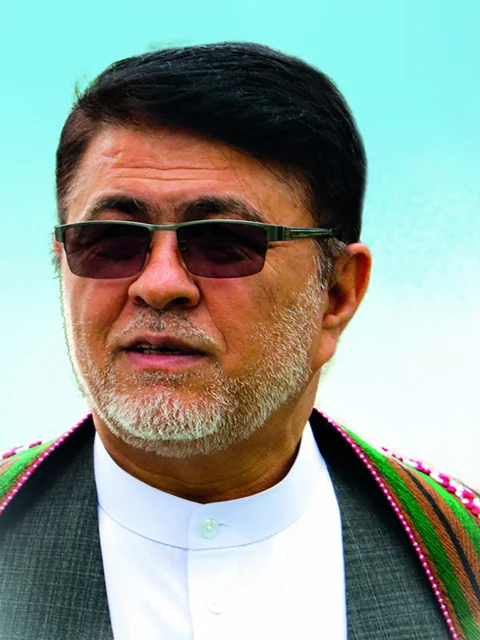
Establishment of the Hamdeli Party of the People of Afghanistan

During the Republican system from 2004 to 2021, Professor Shafaq served the country and its people for nearly 13 years as a governor in five provinces. Throughout this period, in addition to receiving hundreds of certificates and letters of appreciation, he was the only civil service employee who, in recognition of his honest services, was awarded three high state medals by the President of the country. In recent years, at the suggestion of his peers and a group of young cadres from the country, he founded the "Hamdeli Party of the People of Afghanistan." A party that has its roots in the struggles of the past four decades and is actively present in 15 provinces across the country. Currently, he continues his political struggles as the head of the Central Council of the aforementioned party.